
← The Chronicle · History Behind the Story
Why Did Lambert Simnel’s Rebellion Fail at Stoke in 1487?

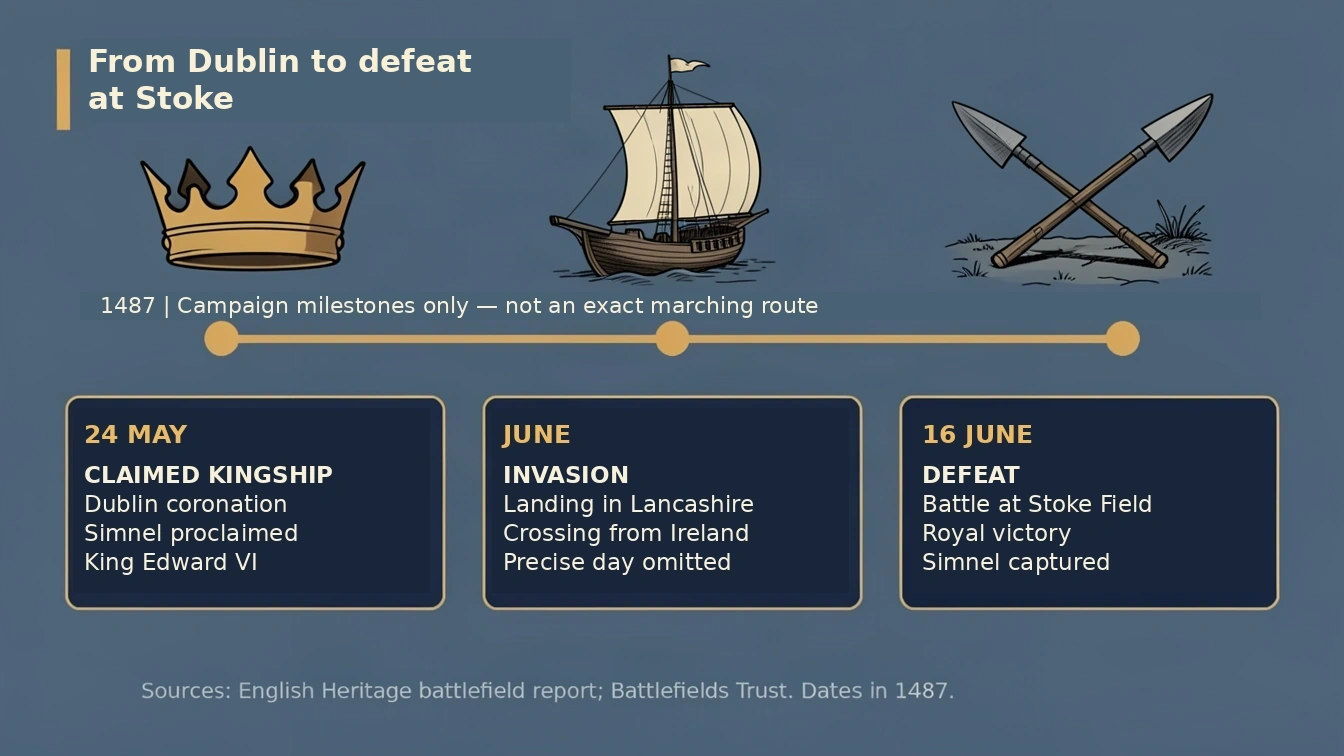
A boy was crowned in Dublin as King Edward VI on May 24, 1487. His name was Lambert Simnel, and his supporters wanted to replace Henry VII.[3] A ceremony gave them a king to rally around. They still needed an army that could win.
Support across the sea
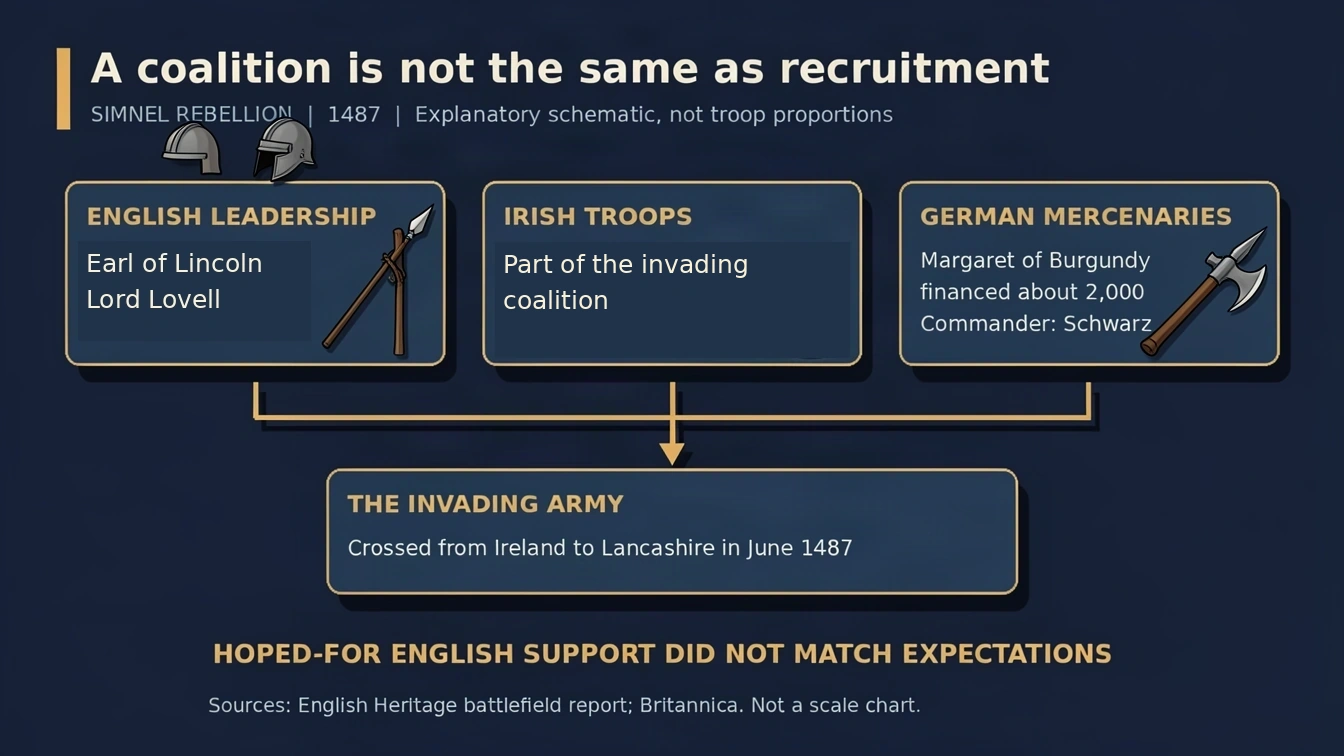
The rebel force included English Yorkists, Irish troops and German mercenaries. Margaret of York helped fund the German soldiers.[3] The Earl of Lincoln and Lord Lovell led the campaign.
View full illustration (opens in a new tab)
After landing in Lancashire in June, they did not attract the English support they expected. An attempt to enter York failed. The army continued south while Henry gathered forces of his own.[1][3]
The battle at Stoke
The armies met near East Stoke in Nottinghamshire on June 16. The Earl of Oxford led the front part of Henry’s army, called the vanguard. It came under heavy pressure, held together and counterattacked.[2][3]
The rebels were defeated. Lincoln was killed and Simnel was captured.[3] Serious backing had not been enough: the campaign needed more support, and the force it assembled lost the battle.
View full illustration (opens in a new tab)
Follow the sequence
Put three milestones in order: the Dublin coronation, the landing in England and Stoke Field. Which step gave the rebels a claim? Which tested whether they could make it real?
Surviving accounts do not give us every detail of the fighting. Our diagrams organize the story; they are not recovered battle plans. The important sequence is supported, even where exact numbers and positions remain uncertain.[3]
Compare another failed challenge to power in the rebellion of 1088.
Sources
Related stories

History Behind the Story
The Pazzi Conspiracy: What the Evidence Can Show
An attack on the Medici, a failed takeover and a surviving medal: trace the Pazzi Conspiracy of 1478 and the limits of its evidence.
Read the story →