
← The Chronicle · Learn the Moves
Threefold and Fivefold Repetition: When Is a Chess Game Drawn?
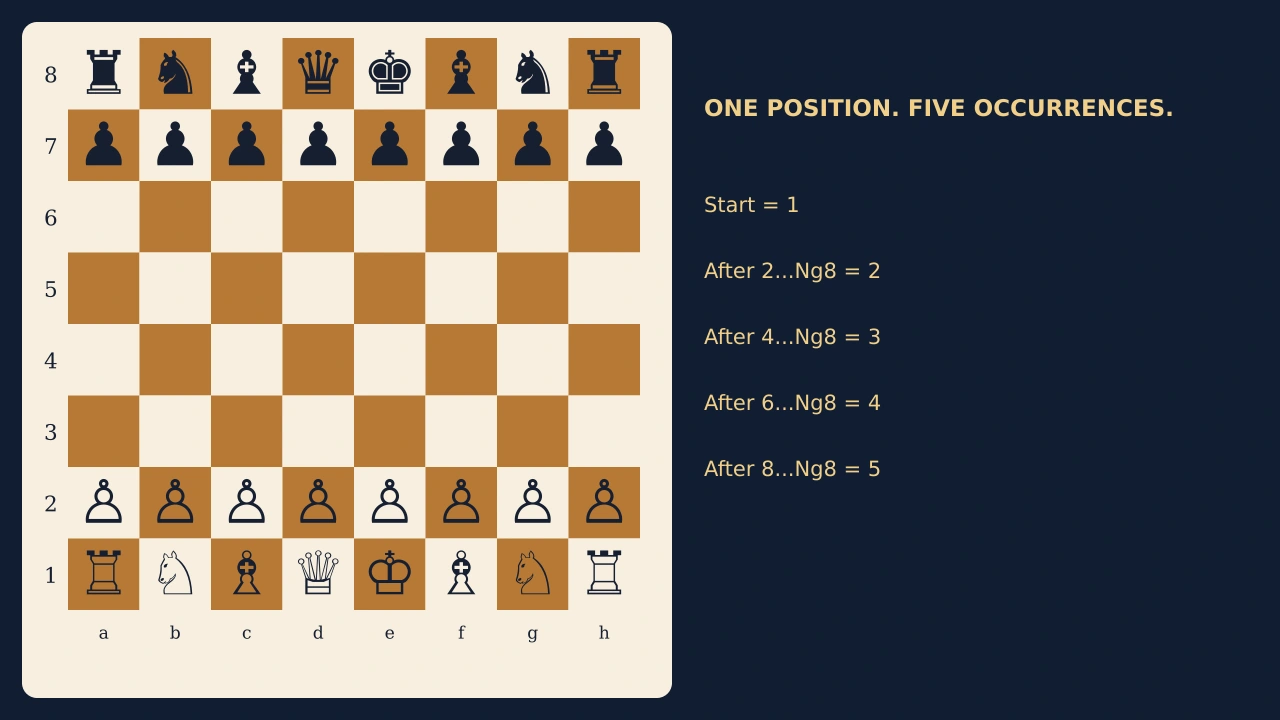
Repetition counts positions, not checks. The pieces must match, the same player must have the move, and the legal possibilities must match too.[1]
Count the first appearance
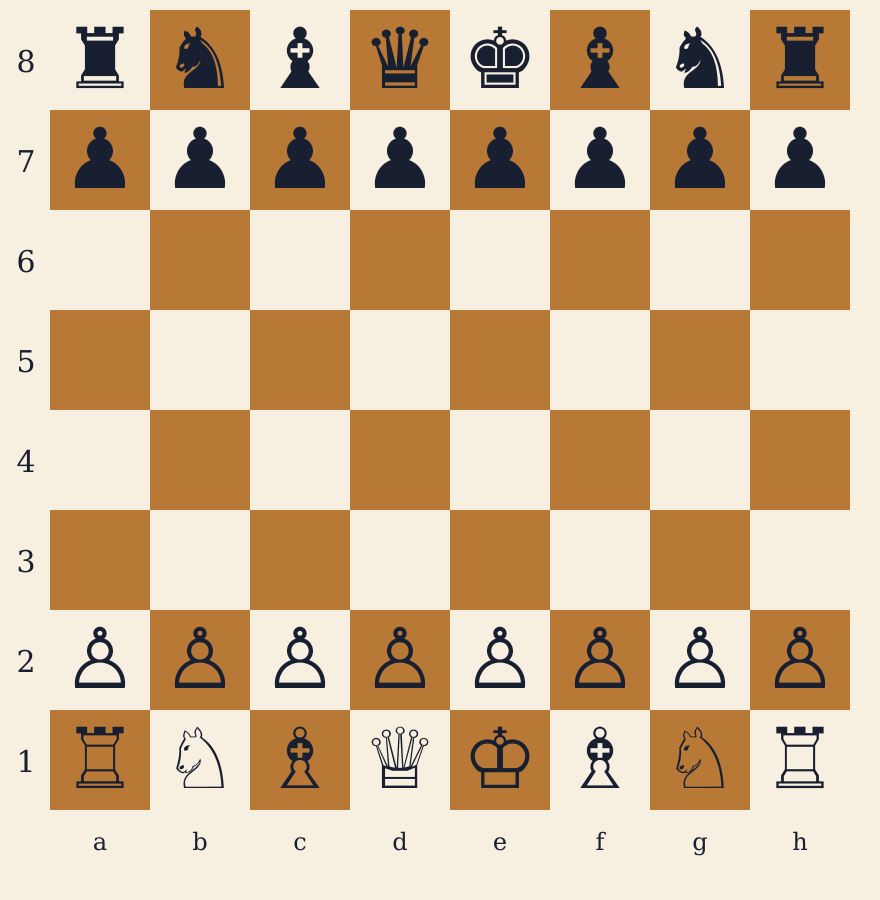
Try this after a game, starting from the normal initial setup: Nf3, Nf6, Ng1, Ng8. Both knights come home. That is the second appearance of the starting position, because the untouched board counted first.
View full illustration (opens in a new tab)
Repeat the four moves once more. The starting position now appears a third time. White can claim a draw under FIDE’s procedure. If neither player claims and the exercise continues, four return cycles produce the fifth appearance and an automatic draw.[1]
Same squares, different rights
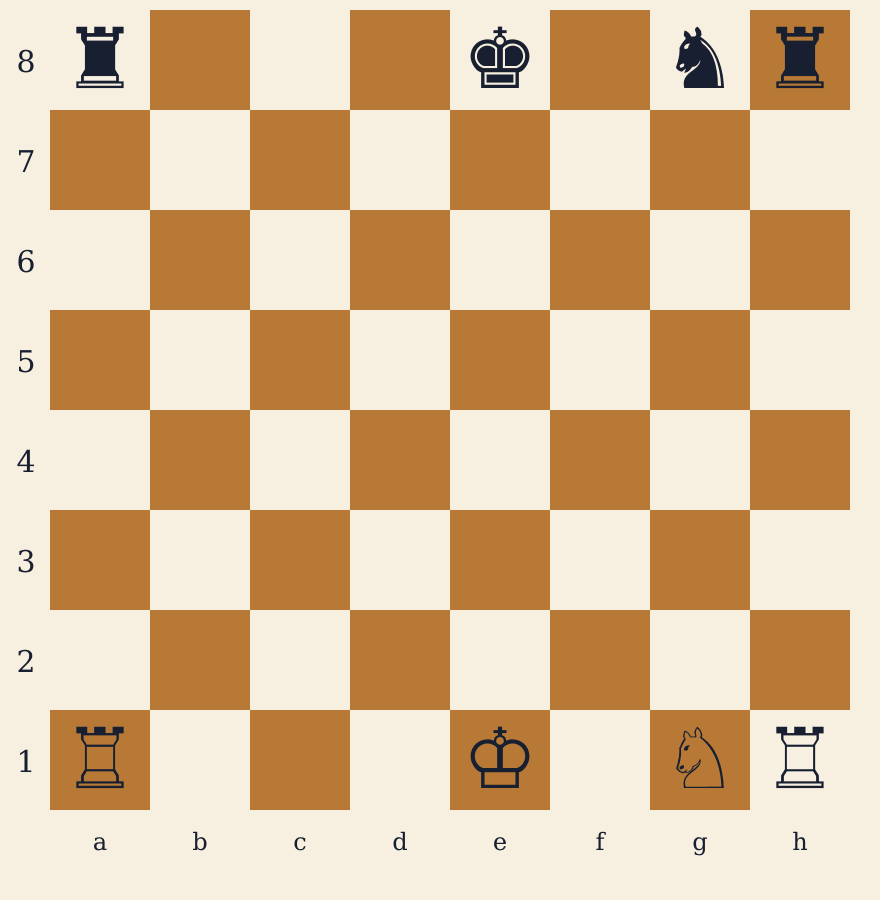
Move a rook away and back in the second diagram’s practice sequence. The board can look the same, but that rook has lost its castling right. The positions do not match for repetition.[1]
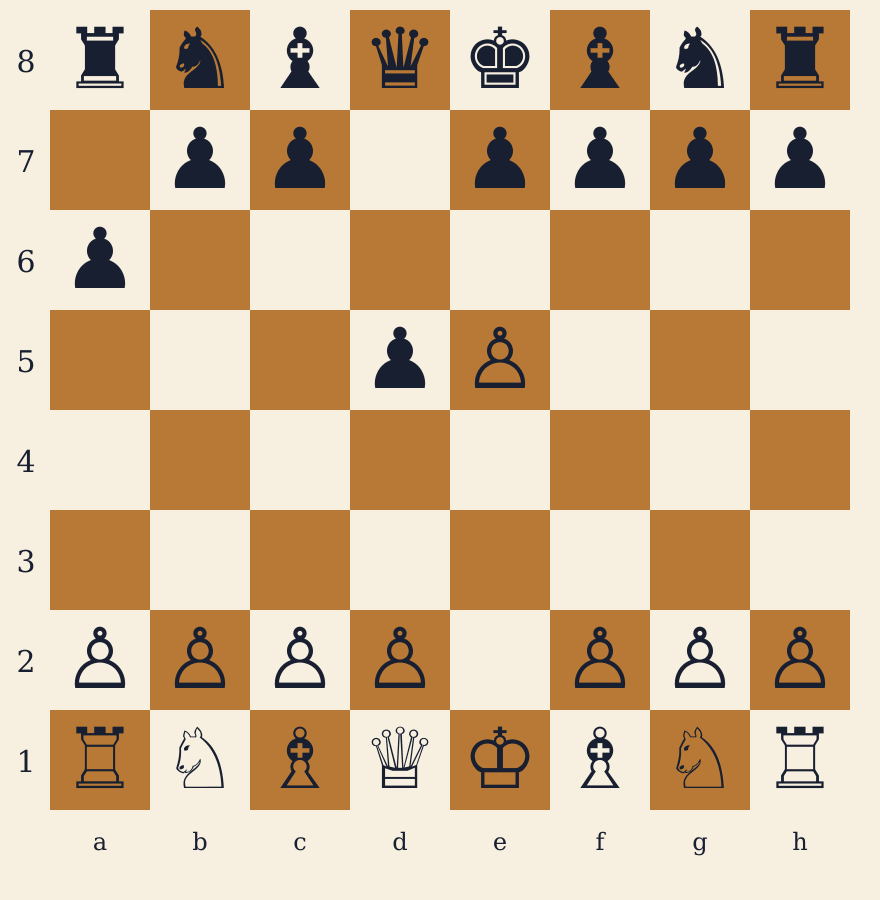
En passant can matter too. In the third example, start from the normal board and play e4, a6, e5, d5. White can capture en passant now. After Nf3, Nf6, Ng1, Ng8, the arrangement returns but that chance has expired. Those positions do not match.[1]
View full illustration (opens in a new tab)
Use the game record
For a threefold claim, follow the arbiter’s procedure, including the intended-move procedure if appropriate. Online sites may handle claims differently.[1] Keep this practice separate from a live competitive game, where outside help is not allowed.
View full illustration (opens in a new tab)
After a game, mark each appearance of one position. Check the turn and rights as well as the squares. Then explain whether you found a claim opportunity or the automatic fivefold result.
Sources
Related stories
Learn the Moves
Check, Checkmate and Stalemate: What Is the Difference?
Learn the difference between check, checkmate and stalemate with three exact positions, legal replies and a short practice check.
Read the story →
Learn the Moves
The 50-Move and 75-Move Rules: What Resets the Count?
Castling does not reset the count. Learn what does, how a 50-move claim works, and when the automatic 75-move draw gives way to checkmate.
Read the story →