
← The Chronicle · History Behind the Story
Who Was Guy Fawkes, and Why Do We Remember November 5?
A failed plot usually keeps its organizer's name. This one kept the man who was found with the powder. Guy Fawkes did not plan the Gunpowder Plot. Robert Catesby did. Fawkes was the face left in the room, and November 5 still carries his name.
Checkered Crown's London 1605 adventure uses a fictional Knight in that role. The lines he speaks are invented. This is the man.
York
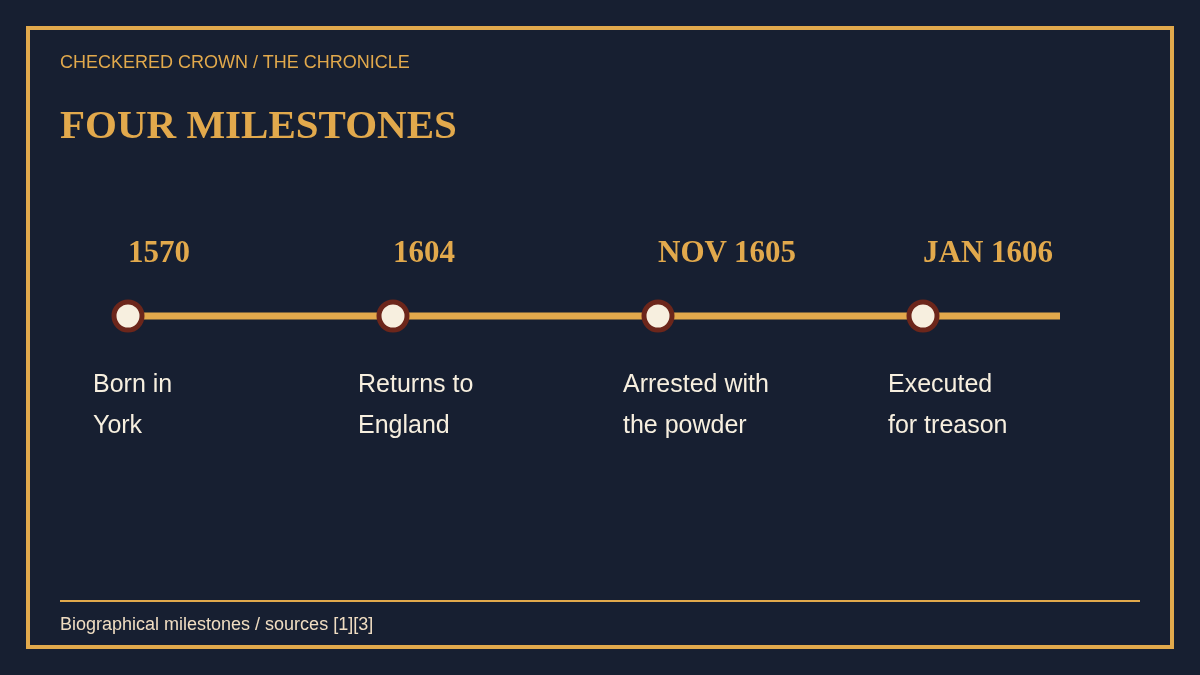
Guy Fawkes was born in York in 1570. His father, Edward, was a church lawyer and a Protestant. His mother's family included secret Catholics. After Edward died, his mother married a Catholic, Dionysius Bainbridge, and Fawkes converted. Catholic practice in Elizabethan England could mean prison or death for a priest caught saying Mass. That was the world he grew up in. It does not make the later plot anyone's but the men who chose it.
The soldier
He left England and served in the Spanish army in the Netherlands. Accounts also call him Guido Fawkes. Same man, another form of the name. The years with the army gave him the one skill the others wanted. He knew explosives. When Catesby's group needed someone to stay with the powder and set the fuse, they sent for him.
The plot
James became king in 1603. Some Catholics hoped the restrictions would ease. They did not. Catesby gathered a group to kill the king and the men assembled for the State Opening. Fawkes joined them and was back in England in 1604. He was recruited for the room under the Lords, not for the idea. For the rented storeroom, Monteagle's letter, and the search, read The Gunpowder Plot of 1605: What Really Happened?
View full illustration (opens in a new tab)
The arrest
On the night of 4–5 November 1605 he was found with the powder beneath the House of Lords. He gave the name John Johnson. The examination records in the National Archives still carry it. He was taken to the Tower. James authorized torture, and Fawkes named the others. A confession taken that way is evidence. It is not a memoir. He was tried for treason and executed on 31 January 1606.
The day
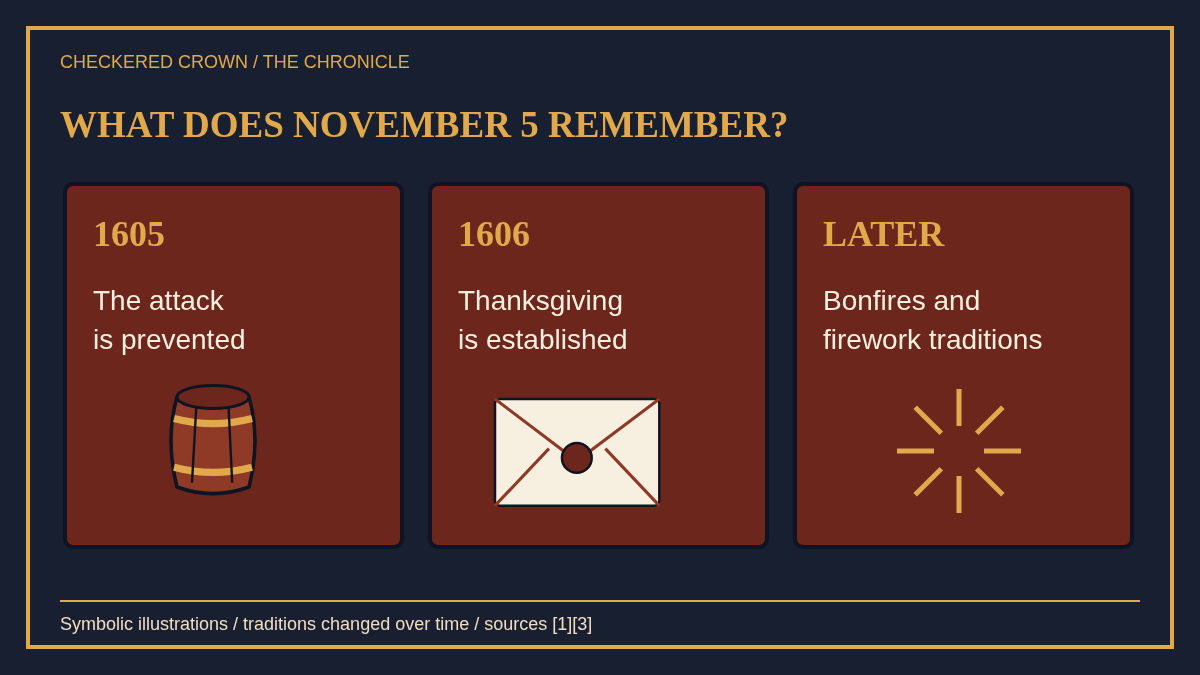
November 5 is not his birthday and not the day he died. It marks the opening that did not happen, and the king and Parliament that were still there in the morning. An Act of Parliament made it an annual thanksgiving. The law stood until 1859. A guy is an effigy burned on the bonfire, named for him, not a portrait. Britain still marks the night with fires and fireworks. There was no explosion at Parliament to celebrate. The day remembers a plot that failed.
View full illustration (opens in a new tab)
The face
His name now shows up on masks and protest banners. That use is later. It is not a portrait from 1605, and it does not change what he was there to do. The Checkered Crown Knight is a character in a company of six. In this adventure he plays the role. He is not a likeness.
The short answer
We remember Guy Fawkes because he was the man found with the powder. November 5 commemorates the attack that was stopped.
See the history become a story: Explore Checkered Crown's London 1605 animated adventure.
Follow the story: Get premiere updates. Parents can sign up for younger readers. Email updates are for ages 13 and over.
Sources
Related stories
History Behind the Story
The Gunpowder Plot of 1605: What Really Happened?
Catesby organized the plot. Fawkes was found with the powder. Follow the warning, the search and the evidence that leaves some questions open.
Read the story →